
Skin Cancer Detection & Treatment
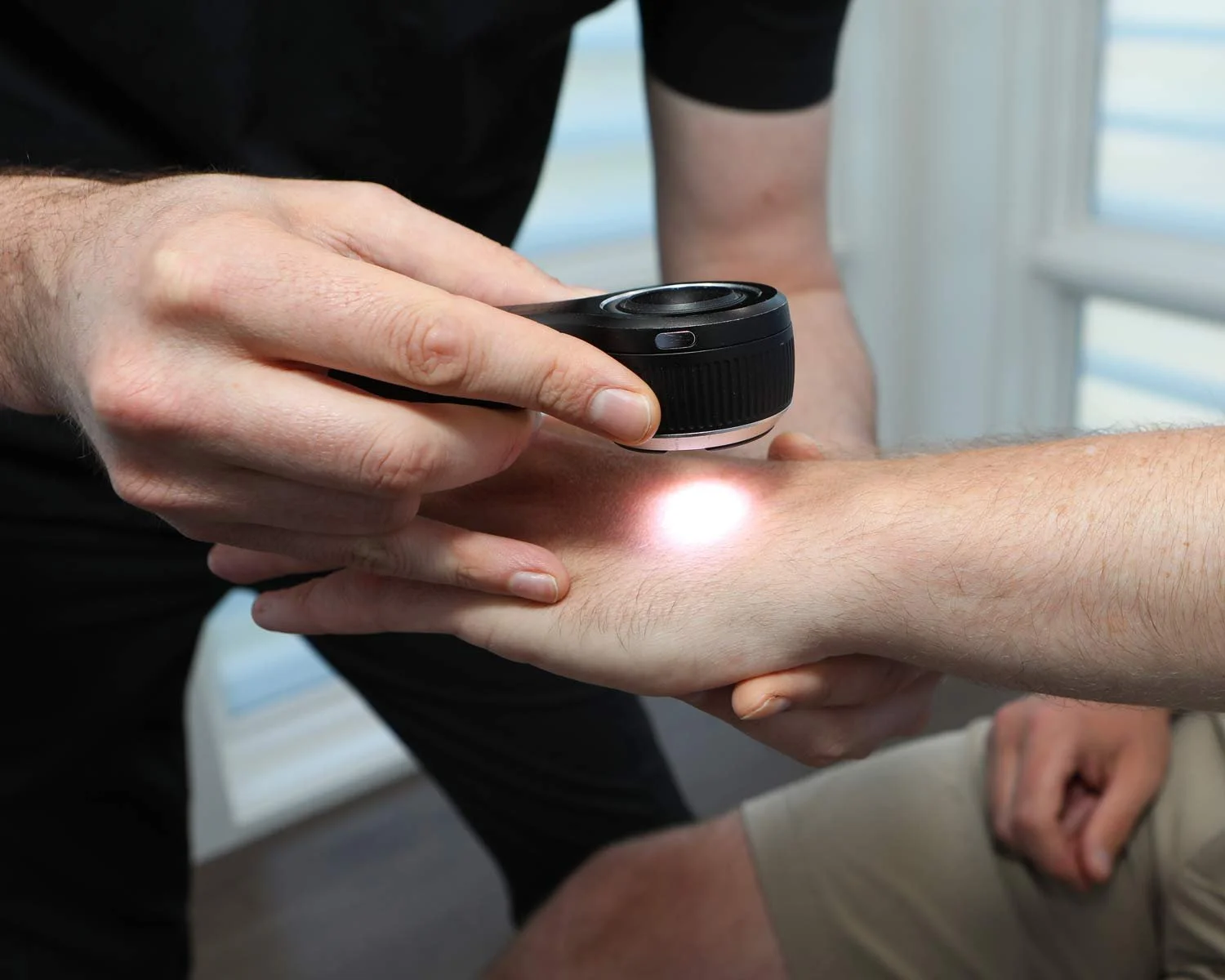
Skin cancer is the uncontrolled growth of abnormal skin cells. It occurs when DNA damage to skin cells is unrepaired and triggers mutations that lead skin cells to multiply rapidly forming malignant tumors. DNA skin damage is most often caused by ultraviolet radiation from the sun or tanning beds.
skin cancers and precancers types
Actinic keratosis
It’s the most common type of precancer – if left untreated it is likely to develop into a skin cancer. Actinic keratosis (AK) appear as a crusty, scaly growth – most become red, but some are a shade of tan, white, pink or flesh-toned, they can also be a combination of these colors. They may appear, disappear, and then reappear.
Atypical moles
Also called “dysplastic nevi”, they are unusual-looking benign moles that resemble melanoma. People who have them are at an increased risk of developing melanoma. Heredity appears to play a part in the formation of atypical moles, especially among Caucasians.
Basal cell carcinomas
BCCs are abnormal, uncontrollable growths that arise in the skin’s basal cells, which line the deepest layer of the epidermis. They often look like open sores, red patches, pink growths, shiny bumps or scars. BCCs are usually caused by both cumulative and intense, occasional sun exposure. When treated promptly, BCCs almost never spreads beyond the original tumor site.
Melanoma
The deadliest form of skin cancer, these tumors originate in the melanocytes (pigment-producing cells) in the basal layer of the epidermis. Melanomas often resemble moles, and some develop from moles. The majority of melanomas are black or brown, but they can also be skin-colored, pink, red, purple, blue or white.
Merkel cell carcinoma
MCCs are a rare, aggressive skin cancer that has a high risk of spreading throughout the body. They most commonly show up on sun-exposed areas in fair-skinned individuals over age 50. MCCs look like red, blue, or flesh-colored lumps that appear on sun-exposed areas of the skin.
Squamous cell carcinoma
SCCs are uncontrollable growths of abnormal cells in the squamous cells, which make up most of the epidermis. They typically look like scaly red patches, open sores, elevated growths, or warts – they often crust or bleed.
Skin Cancer Prevention
All forms of skin cancer are mainly caused by cumulative exposure to ultraviolet (UV) exposure from the sun and/or tanning beds over time.
The Skin Cancer Foundation recommends using a broad-spectrum (UVA/UVB) sunscreen with an SPF 15 or higher daily – however this alone is not enough:
Seek the shade, especially between 10 AM and 4 PM when the UV rays are the strongest
Do not burn
Never use tanning beds
Cover up with clothing, including a broad-brimmed hat and UV-blocking sunglasses
For extended outdoor activity, use a water-resistant, broad spectrum (UVA/UVB) sunscreen with an SPF of 30 or higher: Apply 1 ounce (2 tablespoons) of sunscreen to your entire body 30 minutes before going outside. Reapply every two hours or immediately after swimming or excessive sweating.
Keep newborns out of the sun – do not use sunscreen on babies under the age of 6 months old.
Examine your skin head-to-toe every month
See your Dermatologist every year for a professional skin exam
ABCDEs of skin cancer
Call your Dermatologist if you notice any of the ABCDEs
Asymmetry
If the two halves of a mole do not match in appearance (color, shape or size) it is a warning sign
Border
The borders of an early melanoma tend to be uneven, the edges may even appear scalloped or notched
Color
A mole with a variety of colors is a red flag. These could be a range of brown, tan, black, red, white or blue.
Diameter
Melanomas are often larger in diameter than a pencil eraser (1/4 inch).
Evolving
Any change in size, color, shape, elevation, texture or symptom (bleeding, itching, crusting) is a reason to be seen by your Dermatologist right away.